
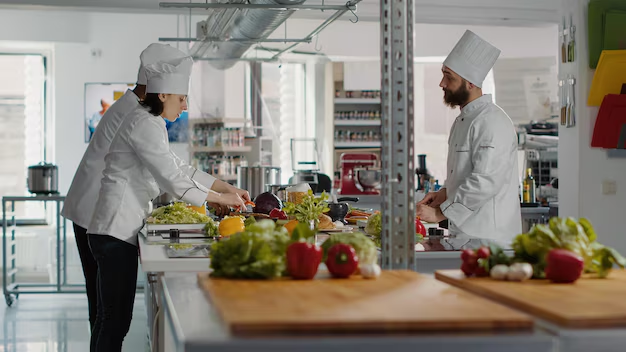
The food industry is evolving rapidly. Traditional restaurant models are being replaced by more flexible, cost-effective, and scalable solutions. At the center of this transformation is the commissary kitchen.
From cloud kitchens to delivery-first brands, commissary kitchens are shaping the future of how food businesses operate.
🍳 What is a Commissary Kitchen?
A commissary kitchen is a licensed, shared commercial kitchen space where food businesses can prepare, cook, and store food.
It provides:
- Professional equipment
- Legal compliance
- Flexible rental options
👉 It allows businesses to operate without owning a physical kitchen.
🚀 Why the Food Industry is Changing
The traditional restaurant model faces challenges like:
- High setup costs
- Expensive rent
- Staffing requirements
- Slow scalability
At the same time, consumer behavior is shifting toward:
- Online ordering
- Fast delivery
- Convenience
👉 This shift is driving the demand for commissary kitchens.
🔮 Why Commissary Kitchens Are the Future
💰 1. Low Investment, High Returns
Starting a restaurant requires heavy investment.
Commissary kitchens:
- Eliminate setup costs
- Reduce operational expenses
- Minimize financial risk
👉 This makes them ideal for modern entrepreneurs.
🚚 2. Growth of Food Delivery Platforms
Apps like:
- Swiggy
- Zomato
- Uber Eats
have changed how people consume food.
👉 Commissary kitchens are perfectly designed for delivery-based businesses, where dine-in is not required.
⚡ 3. Faster Business Launch
With a commissary kitchen:
- No construction needed
- No long setup process
- Immediate operations
👉 Businesses can launch in days instead of months.
📈 4. Easy Scalability
Commissary kitchens allow businesses to:
- Increase production easily
- Expand to multiple locations
- Run multiple brands
👉 This scalability is essential in today’s competitive market.
🍔 5. Rise of Cloud Kitchens
Cloud kitchens (delivery-only restaurants) are booming.
Commissary kitchens support this model by:
- Providing shared infrastructure
- Reducing costs
- Enabling multi-brand operations
👉 Many successful food brands now operate without dine-in spaces.
🔄 6. Flexibility & Adaptability
Food trends change quickly.
Commissary kitchens offer:
- Flexible rental plans
- Easy menu changes
- Quick business pivots
👉 This helps businesses stay competitive.
🌍 7. Efficient Use of Space & Resources
Instead of multiple restaurants building separate kitchens:
- One commissary kitchen serves multiple businesses
👉 This reduces waste and improves efficiency.
🧼 8. High Standards of Hygiene
Commissary kitchens are:
- Regularly inspected
- Professionally maintained
- Food safety compliant
👉 Ensures consistent quality and customer trust.
🤝 9. Encourages Innovation & Collaboration
Shared kitchens bring together:
- Chefs
- Entrepreneurs
- Food brands
👉 This creates a collaborative environment for innovation.
📊 10. Supports Startup Ecosystem
Commissary kitchens lower entry barriers for:
- New entrepreneurs
- Small businesses
- Home chefs
👉 This leads to more innovation and competition in the food industry.
🆚 Traditional Restaurant vs Future Model
| Feature | Traditional Restaurant | Commissary Kitchen Model |
|---|---|---|
| Cost | High | Low |
| Setup Time | Slow | Fast |
| Flexibility | Limited | High |
| Delivery Focus | Medium | High |
| Scalability | Difficult | आसान |
👉 The future clearly favors flexible and scalable models.
💡 Real-World Trend
Many modern food brands:
- Start with commissary kitchens
- Grow through delivery platforms
- Expand into multiple locations
👉 This model is becoming the standard for new businesses.
🔮 Future Predictions
In the coming years, we can expect:
- More cloud kitchens
- Increased demand for shared kitchens
- Tech integration (AI, automation, delivery optimization)
- Multi-brand food businesses
👉 Commissary kitchens will be at the core of this transformation.
🏁 Conclusion
Commissary kitchens are not just a trend—they are the future of the food industry.
They offer:
- Low investment
- High flexibility
- Faster growth
- Scalable operations
👉 If you want to succeed in the modern food business, adopting the commissary kitchen model is the smartest move.